

The perfect glove does not exist. However, there are gloves that are just right for what you’re going to do – in exactly the cold you face. It is an important difference. We understood that quite soon when we started develop our own models here from Luleå.
It started with soaking wet hands
February 2018. Per and I were out on the mountain. The cold was severe, the snow wet and the gloves we wore – bought from a well-known brand for a well-known sum – lasted about four hours. Then had cold hands, saturated fabric, and the whole experience ruined.
It wasn’t the first time. But it was the last time we accepted it as normal.
We knew the problem was not the laws of physics. There are materials that retain heat effectively even when damp. There are membrane technologies that blocks water without trapping sweat. There are goatskin that molds to the hand and gets better with age, not worse. The question was why no one put it together in a way that actually worked in Nordic climate – not just in a laboratory in Central Europe.
The answer turned out to be that it requires time, persistence, and quite a bit failed prototypes.
What we actually tested – and what went wrong
Prototype one. The gloves were too stiff. We had waxed the goatskin too stiff, finger mobility too limited. We discarded them.
Prototype three. The membrane was positioned incorrectly – not enclosed but exposed against seams. At -15°C and wet snow, it leaked after an hour. Back to the drawing board.
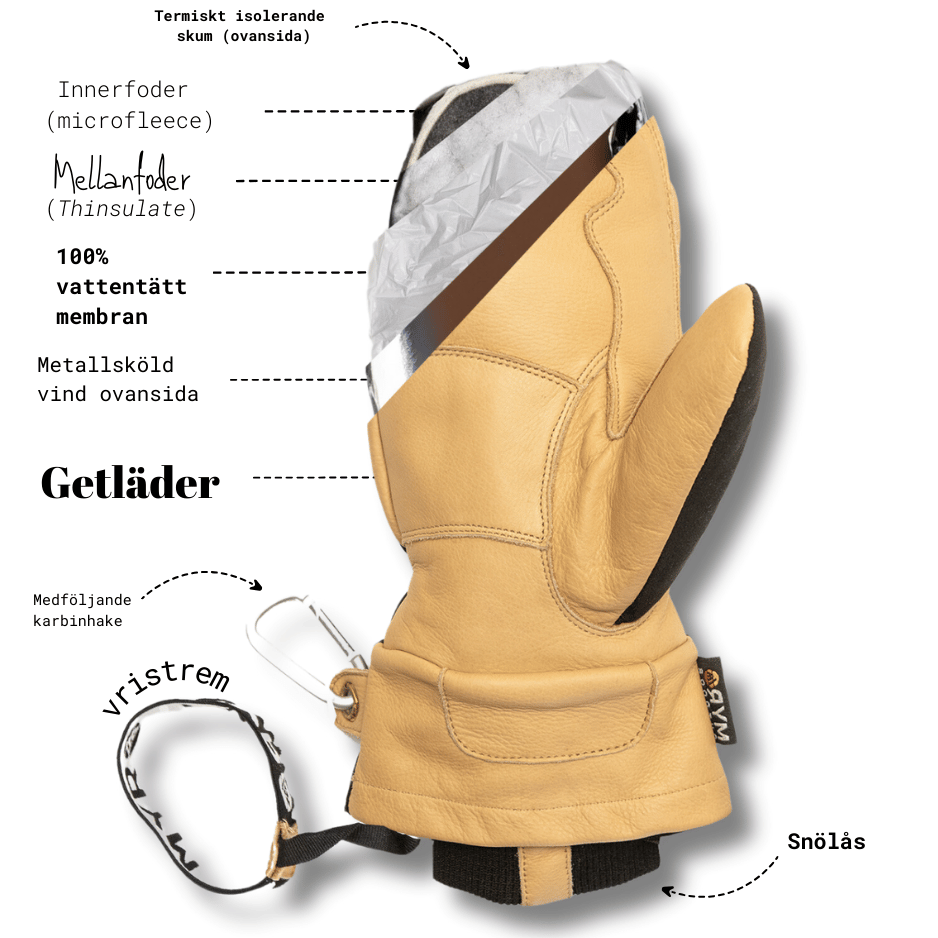
Prototype seven. It’s starting to look like something. Outer layer in canvas weave and goatskin – a material that has withstood sea winds for hundreds of years as sailcloth – plus a hermetic polyurethane membrane that actually keeps water out, not just repels it. Thinsulate in lining: 40 grams provides proper insulation down to -35°C without the glove becomes thick and cumbersome.
Seams with extra padding at the knuckles. Cuff that fits without twisting. A model that can be dried in a ventilated space and be reused day after day – not a disposable glove with a premium price tag.
It took us nearly a year and a half. We interviewed reindeer herders, mountain guides and ice fishermen. We took apart competitors' products and understood what they compromised. We sent sample pairs to people who actually went out and used them – not people who tested them inside.
What should you consider when choosing gloves?
- Activity level determines insulation needs. Sedentary – snowmobiling, hunting, ice fishing – requires more insulation than skiing where you generate your own heat. Choose based on what you actually do, not what sounds warmest.
- Waterproofing is not the same as water repellency. Many gloves are marketed as "waterproof" but only have a DWR impregnation. It washes out over time. A built-in membrane holds – impregnation does not.
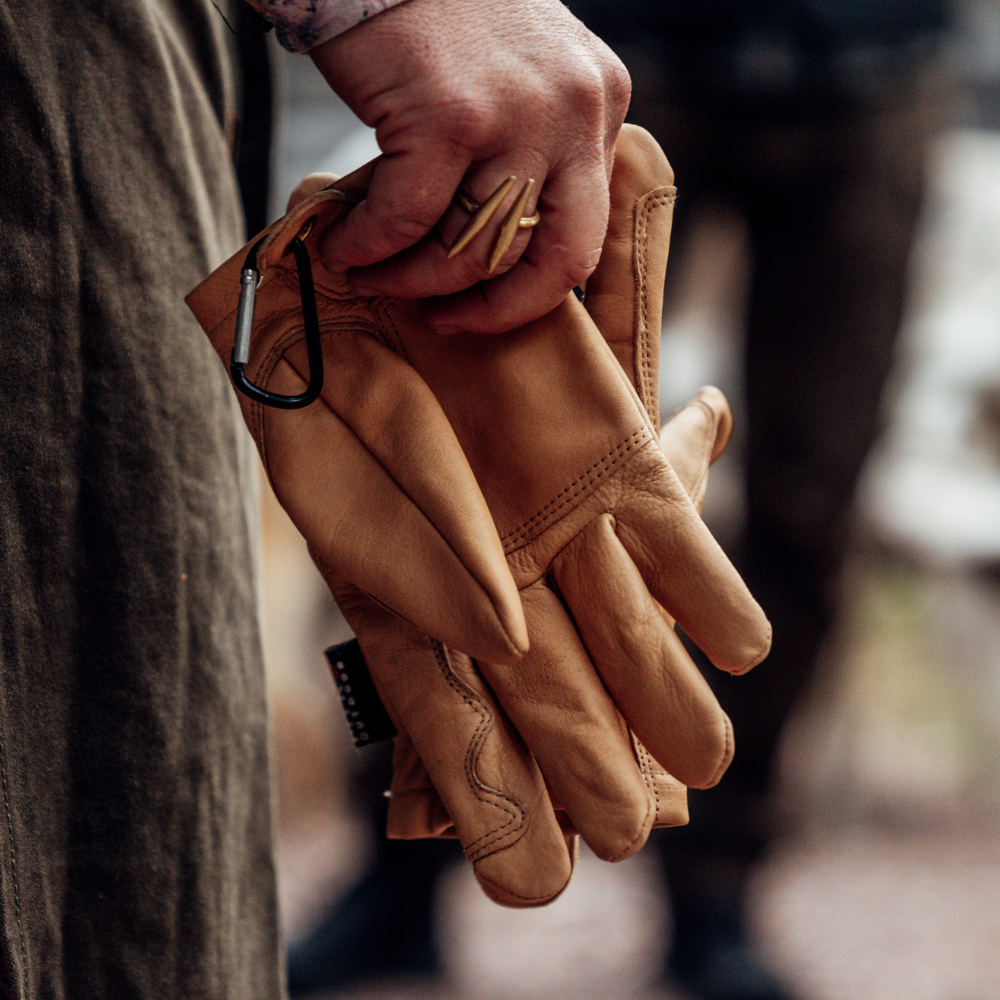
- Goatskin shapes to your hand. Unlike synthetic materials, goatskin softens and adapts themselves. That means glove number ten is more comfortable than number one – not the other way around.
- The seams are the weakest point. Check where they are and if they are reinforced in exposed areas – thumb grip, palm, cuff. The seams are what wear out breaks first if the construction is sloppy.
- A glove for everything is a glove for nothing. A mitten keeps hands warmer in extreme cold. A finger glove gives mobility when you need it. Change after activity, not based on what looks good in the soy shop.
Why we do this
We are based in Luleå and do product development from here. That means we test in real cold, not simulated. That also means we talk to people who actually have cold hands – and that we understands the difference between -5°C and -25°C in practice.
We don’t make jackets. No shoes. No vests. Just gloves. That is a conscious choice, and that’s why every detail in the construction is well thought out.
Common questions about gloves and warmth
How warm gloves do you need at -20°C?
At -20°C and sedentary activity, you need at least 40 grams Thinsulate insulation or equivalent. Mittens keep fingers warmer than finger gloves because they share heat. At high activity levels, thinner gloves last longer.
What is the difference between waterproof and water-repellent gloves?
Water-repellent gloves have a surface treatment (DWR) that makes water rolls off – but which washes out and deteriorates over time. Waterproof gloves have a membrane built into the construction that stops water regardless of the condition of the surface treatment. With repeated exposure to wet snow and rain is the decisive difference.
Do leather gloves keep you warm in the cold?
Goatskin does not insulate by itself – it acts as an outer shell and protection. The warmth in a leather glove comes from the lining, not the leather. The advantage of goatskin is that it is extremely durable, shapes after use and withstand wax maintenance without deteriorating.
How often should you impregnate your gloves?
Leather gloves should be waxed with leather fat about once per season, or when the leather starts to look dry. We recommend Organotex leather wax – bio-based and effective. Canvas fabric re-impregnated with warm air (hairdryer) that melts the existing beeswax and seals it.
The perfect glove is the one that fits your activity, your climate and how you move. That’s what we’ve built our range around.
See all gloves from MYR Outdoor →
Unsure which model suits you? Read our buying guide for gloves – or contact us directly and we will respond.